In this write-up
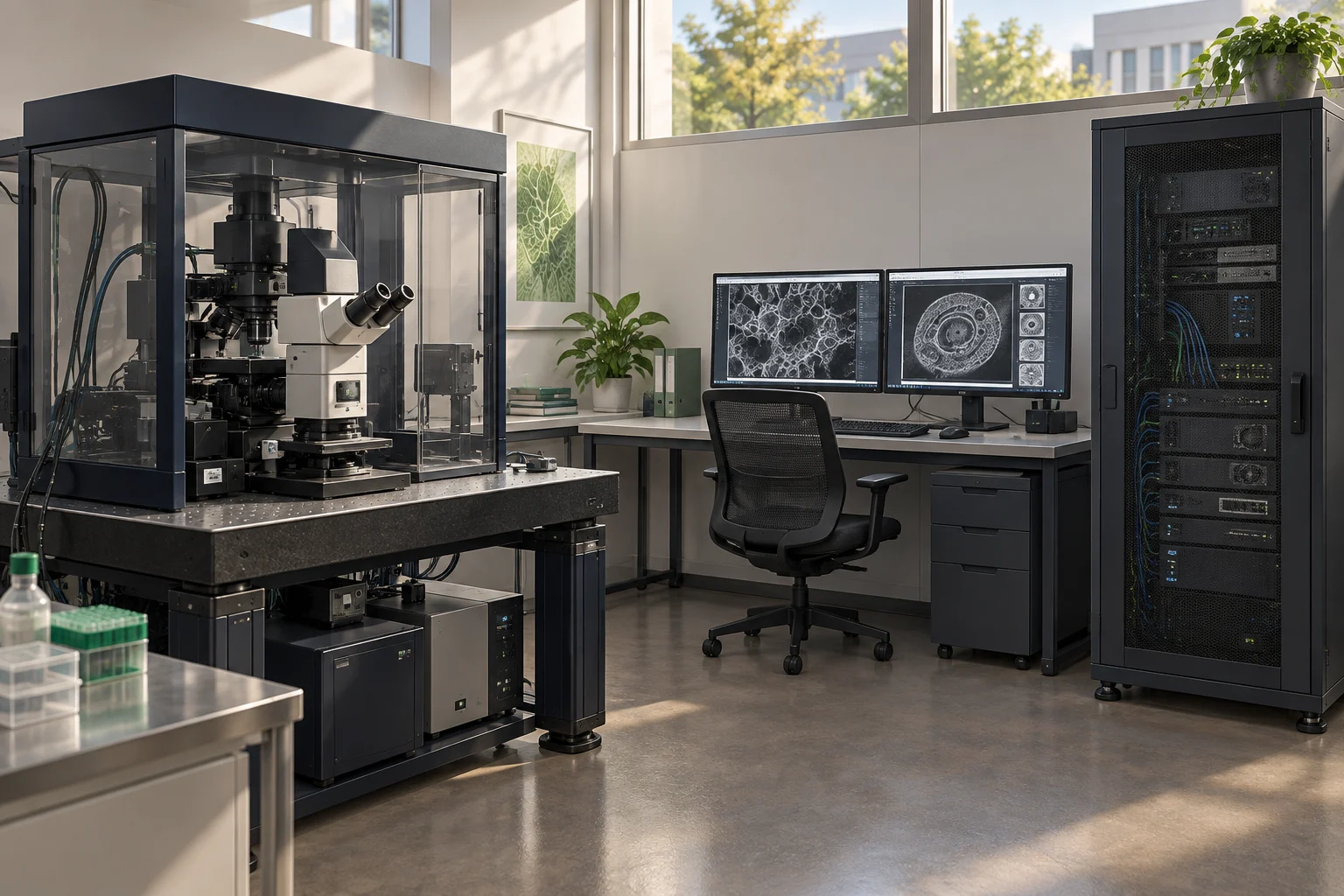
Counting desks would have made this imaging laboratory look like a small office. Following its data told a different story.
The lab’s important traffic moved among acquisition systems, processing workstations, and storage. A handful of those systems could place demands on the network that bore little resemblance to ordinary office use. The design needed to serve the workflow, leave room for growth, and remain supportable by the people responsible for it.
Follow the dataset
Oaktown Tech mapped the imaging and storage workflows before choosing switching and uplink capacity. That established which systems actually exchanged large datasets and where those transfers shared infrastructure.
The distinction matters. A fast connection at one workstation is not the same as adequate capacity along the whole path. Access links, aggregation, and storage connectivity must be considered together. The network should not quietly become the limiting component between otherwise capable systems.
Put speed where the work needs it
The design used multi-gigabit access and high-speed aggregation around the data-intensive systems. Management and supportability stayed in the architecture, so specialized equipment did not become a collection of infrastructure islands.
Practical headroom was included for larger datasets, new instruments, additional workstations, and storage growth. The architecture was documented so an expansion would begin with an understandable system rather than a fresh round of reverse engineering.
A network sized to the laboratory
The resulting infrastructure was sized for the acquisition, processing, and storage work the lab performed. Large transfers had an appropriate network path, while the overall design remained maintainable.
The network remains one part of that workflow. Storage, software, and the equipment generating the data belong in any performance review; upgrading the links does not make those dependencies disappear.
The first conversation should be about the work
For a similar lab, bring a representative dataset, the systems it travels between, the busiest concurrent tasks, and the time each step needs to finish. Those facts are more useful than a headcount. They also help distinguish a network limitation from a storage or processing bottleneck before money is spent.
The aim is not to make the network itself a research project. It is to give the expensive research equipment a predictable way to do its job. Oaktown Tech’s infrastructure engineering covers that path from workload review through implementation and handoff.