
Network infrastructure
A network you can change with confidence.
Networks accumulate decisions. An extra site, a new application, an emergency workaround. Eventually, the next change needs more than another switch. It needs a clear account of how the system should work.
Start with a short message. Charles will follow up personally. The initial conversation is at no charge.
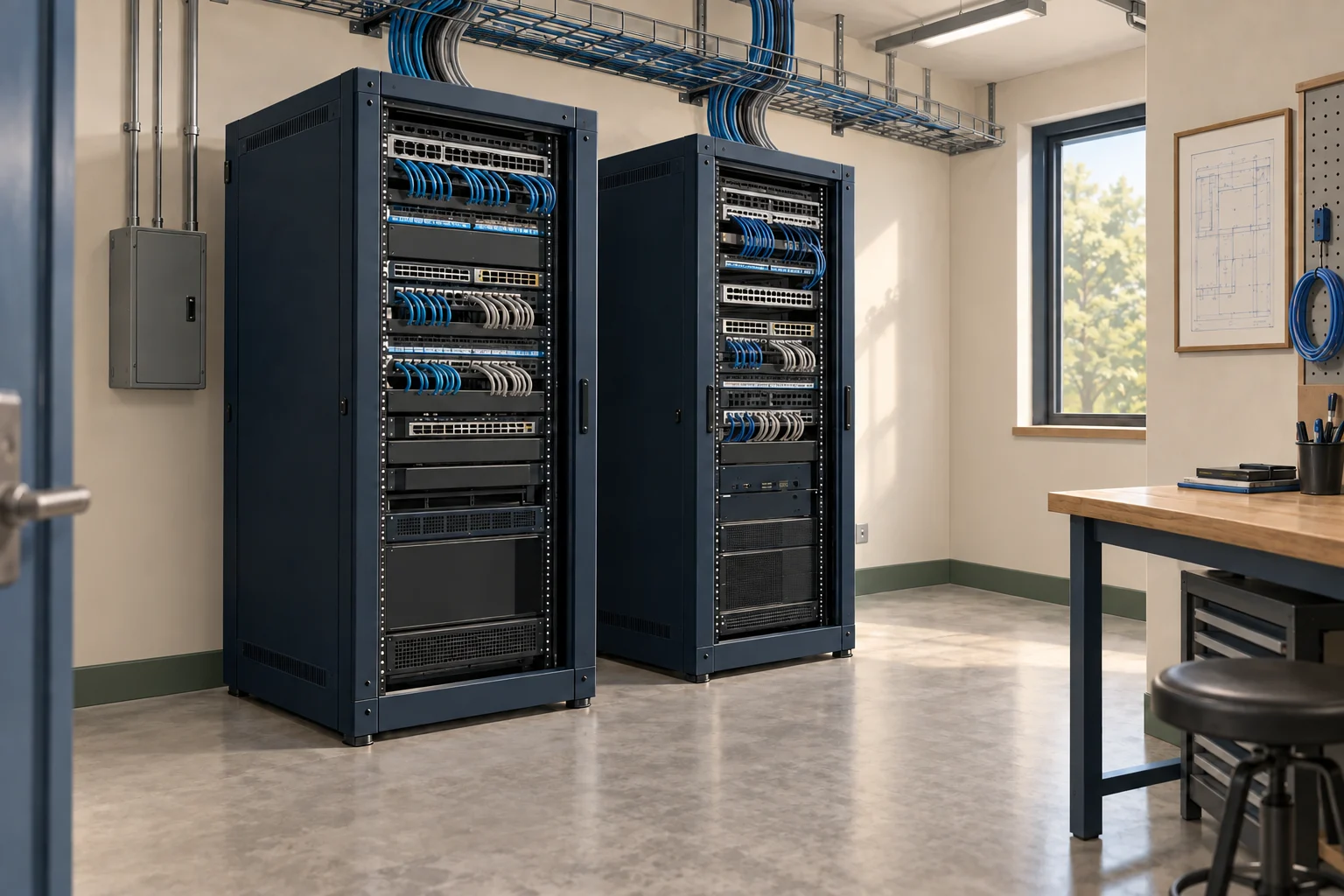
Establish the design before expanding it.
Oaktown Tech reviews the paths your important services use, the boundaries between systems, and the failures the network must withstand. Existing configurations, diagrams, and operating experience provide the evidence. Gaps are identified before they turn into purchasing assumptions.
This work suits a planned refresh, a growing business, a utility connecting remote facilities, or an operator whose topology has become difficult to explain. The right answer may be a targeted correction or a larger redesign. Start with a conversation to establish the objective and scope. If the existing topology and configurations need investigation first, agree that paid work before it begins.
The decisions that need to agree.
Routing and switching
Core and edge roles, addressing, VLANs, subnet boundaries, and the forwarding paths that connect users to services.
Access and separation
Management, business, guest, and operational traffic, with explicit permissions and documented exceptions.
WAN and resilience
Site connectivity, VPNs, carrier handoffs, alternate paths, and the shared dependencies that limit redundancy.
Equipment and migration
A bill of materials tied to the design, licensing and interface requirements, a change sequence, acceptance checks, and rollback.
Make the change testable.
A design should say how you will know it worked. Agree on the required traffic, access restrictions, failover behavior, and management paths before the change window. Where useful, a lab rehearsal can answer architectural questions while mistakes are still inexpensive.
Implementation then has a defined baseline, a sequence, and a way back. Production checks establish the actual result; a successful configuration import is only one step.
Leave the next engineer a map.
The handoff records the finished topology, configuration ownership, design intent, recovery dependencies, and remaining exceptions. Your team can trace the network, support routine operations, and make the next decision from current information.
Let’s talk about the work
Make the next change a considered one.
Tell Charles what is changing, what depends on the network, and which constraints the design must respect.
Start with a short message. Charles will follow up personally. The initial conversation is at no charge.