
In this write-up
There was equipment on the rooftops. That was the visible progress. Turning it into an operable network required a different kind of progress: finding out which problem was actually preventing each link from working.
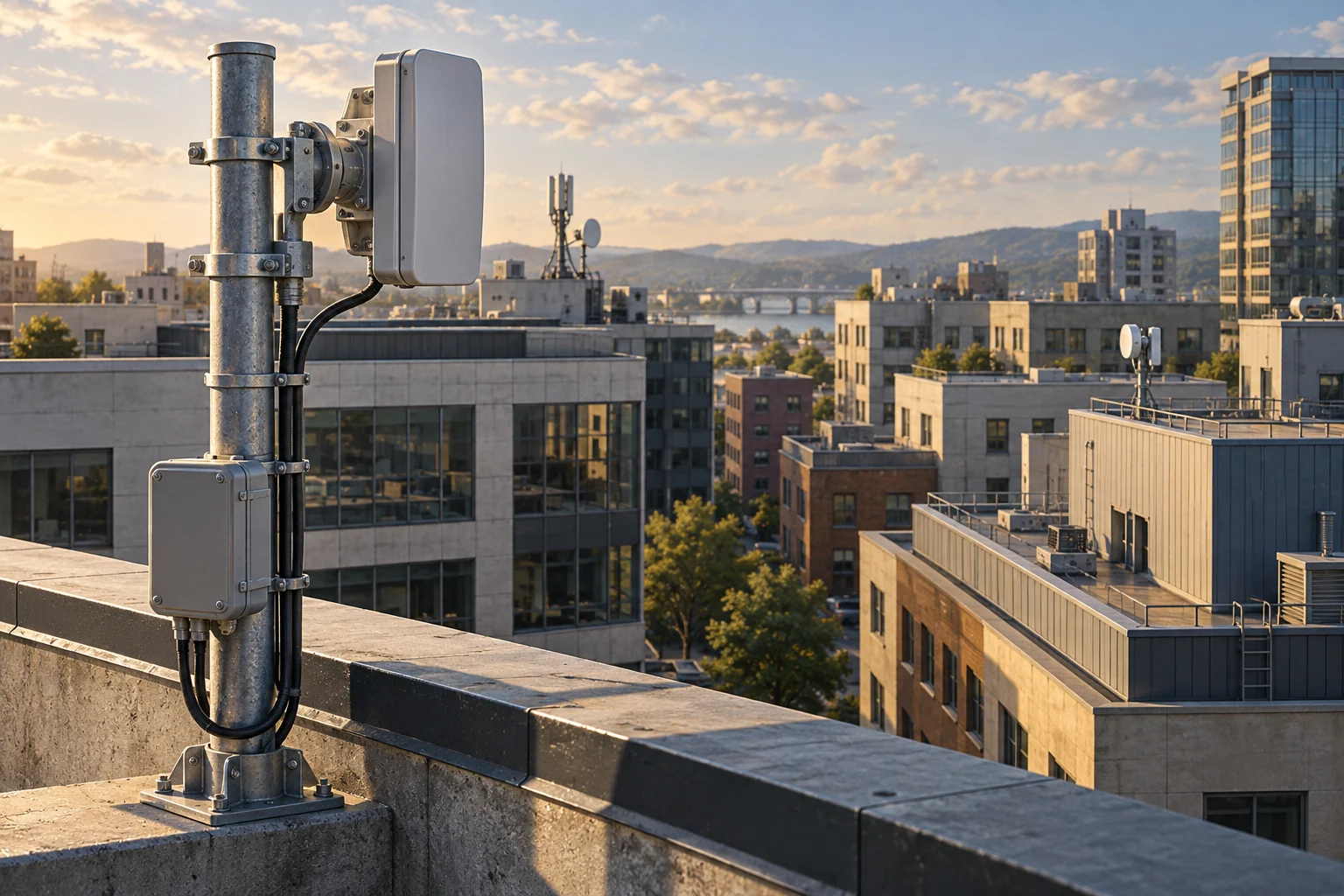
A dense urban, multi-building wireless deployment had stalled. Some nodes were incomplete or poorly aligned; others were powered but not fully configured. RF symptoms were mixed with PoE, UPS, grounding, cabling, access, and topology issues. From a desk, several of those failures could look much the same.
Separate the problem before prescribing the fix
Oaktown Tech worked site by site through installation geometry, radio alignment, configuration, controller behavior, power, and network topology. Correcting sector orientation and link alignment improved the usefulness of installed RF equipment. Bringing powered-but-unconfigured nodes into service helped turn installation activity into a functioning network.
Failed PoE and UPS components also needed attention. A radio that cannot obtain dependable power is not ready for a sophisticated RF diagnosis, however persuasive its last signal reading may be.
The field conditions mattered. Rooftop access, lifts, renovation schedules, line of sight, and safe execution affected what could happen next. Charles adjusted the planned topology as those constraints became clear rather than asking the buildings to conform to the original drawing.
Give the field team a repeatable next step
The recovery work included practical visual guidance, bills of material, and execution plans. Those artifacts helped technicians connect an observed condition to the next task: what to inspect, which component to bring, how a node should be configured, and where its link belonged in the overall topology.
That is particularly important when an engineer cannot be physically present at every site. Good field instructions make the next visit more productive. They also reduce the chance that an apparently small substitution creates another layer of mystery for the following technician.
Progress that outlasts the consultant
The deployment began moving again. Previously idle or incomplete links became useful infrastructure, and the client’s technicians and manager gained the knowledge to carry the project forward.
The goal was never to keep an outside engineer embedded indefinitely. It was to resolve the difficult interactions, explain the decisions, and return a workable project to the people responsible for finishing and operating it.
What to borrow from this approach
On a stalled rollout, sort the remaining work by evidence and dependency, not simply by device. An alignment task, a failed power component, and a building-access problem need different people and preparation. Treating them as interchangeable “radio tickets” can send an expensive crew to a roof with the wrong kit.
The high-site Field Note expands on those physical dependencies. For a deployment that has equipment installed but no reliable path to completion, bring Oaktown Tech the topology, outstanding faults, and field constraints. The first useful deliverable may be a defensible sequence of work rather than another equipment order.